
Key Takeaways
- Unexplained water bill increases often point to concealed leaks.
- Musty odors and visible mold growth indicate excess indoor moisture.
- Discolored or warped walls and ceilings suggest potential water intrusion.
- Professional detection methods ensure accurate leak identification.
Hidden water leaks are one of the most unsettling issues a homeowner can face. These leaks, lurking quietly within walls, floors, or beneath foundations, can result in costly repairs or even threaten the structural stability of a house. Recognizing early signs is essential to prevent lasting damage. For residents in north-central Louisiana, professional slab leak repair and detection services in Ruston can be crucial in addressing water issues that are not easily found or fixed on your own.
Left unchecked, hidden leaks often foster conditions for mold and mildew, degrade indoor air quality, and may even create slip hazards or electrical issues. Early identification and timely solutions limit the financial and personal impacts of hidden leaks, helping you safeguard both your home and your health.
Beyond physical damage, undetected leaks can set the stage for ongoing maintenance troubles or insurance claim complications. Staying aware of these warning signs and knowing when to call for help can be the difference between a simple repair and an extensive, expensive restoration project. For additional guidance on identifying moisture problems, the Environmental Protection Agency provides in-depth homeowner resources at EPA Mold Basics.
Unexplained Increase in Water Bills
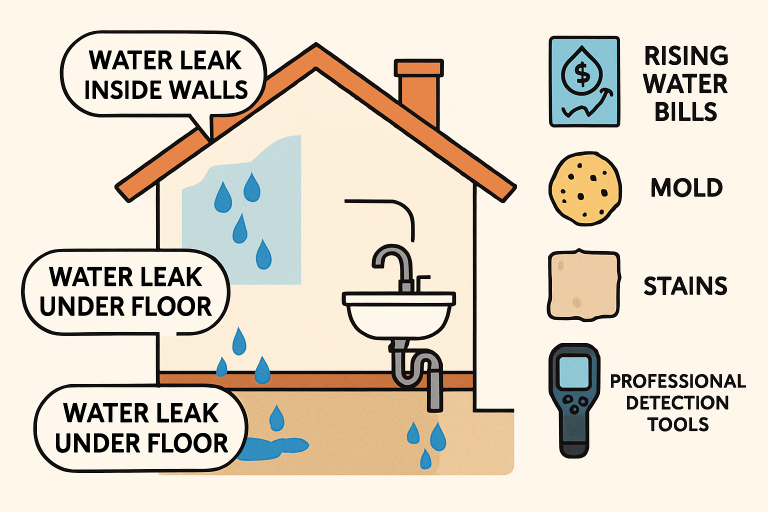
One of the most reliable signs of a hidden water leak is a sudden, unexplained increase in your monthly water bill. Even slight leaks can waste hundreds of gallons over time, stealthily driving up utility costs. Compare usage and charges from previous months to spot any spikes that do not correlate with activities like watering lawns or hosting guests. If the bill remains unusually high when you have not changed your water habits, there is a strong chance that a leak is silently draining your wallet.
To confirm the presence of a leak, check the readings on your water meter before and after a multi-hour period when no water is being used. If the numbers have changed, a hidden leak is likely.
Musty Odors and Mold Growth
Persistent musty smells or areas of visible mold growth inside your home usually signal chronic moisture accumulation caused by a hidden leak. Mold needs moisture to thrive and often grows behind drywall, under carpets, or around baseboards where leaks may be present. These odors can appear strongest in basements, bathrooms, or kitchens, especially if plumbing runs through walls or floors.
If you notice an unexplained mildew smell or small patches of mold, do not ignore them. Mold can worsen allergies and respiratory conditions and may point to a slow, ongoing leak that must be repaired as soon as possible to prevent both property and health damage. Explore the Centers for Disease Control and Prevention’s mold information for more information on the health risks of mold exposure.
Discoloration or Warping of Walls and Ceilings
Another telltale sign of water leaks is the appearance of odd stains, bubbling, or warping on walls and ceilings. Water seeping through building materials causes yellow, brown, or grayish stains to form, commonly found beneath plumbing fixtures, under upstairs bathrooms, or along baseboards. If these marks grow larger or change color over time, it suggests the leak is ongoing.
Sometimes, the wall material softens, bulges, or develops a texture resembling peeling wallpaper or bubbled paint. In severe cases, ceilings may sag or crumble, indicating long-term moisture exposure and necessitating immediate repairs before further collapse or electrical hazards occur.
Professional Leak Detection Methods
While vigilant homeowners can catch many signs of hidden moisture, professional leak detection is often necessary for accurate identification and repair. Licensed plumbers use a range of advanced technologies, such as listening discs, thermal imaging cameras, and ground microphones, allowing them to detect the unique sounds and temperature discrepancies created by escaping water. These non-invasive tools allow pinpoint accuracy, often within a few inches of the leak’s actual location, eliminating unnecessary demolition and repairs.
Expert leak detection is especially valuable for tracking down slab leaks, which can be buried beneath concrete floors or foundations and are virtually impossible to locate with DIY methods. Accurate diagnosis saves time and reduces repair costs by directing efforts exactly where they are needed most.
Preventive Measures
The best strategy against hidden water leaks is diligent prevention and regular inspection. Inspecting plumbing fixtures, appliances, and exposed pipes for signs of corrosion or condensation helps catch small issues before they turn into major leaks. Installing smart leak detectors that alert you to abnormal water flow in real time can stop large leaks from spiraling out of control. Consider scheduling an annual plumbing checkup to ensure that valves, joints, and hoses are all in good working condition.
Taking preventive steps and being proactive in addressing any water-related anomaly significantly reduces the risk of hidden leaks and the subsequent dangers they bring to your home and family.
Conclusion
Identifying hidden water leaks early is crucial to maintaining a safe and healthy home environment. By watching for warning signs such as surging utility bills, persistent musty odors, and discoloration of surfaces, you can catch leaks before they cause irreversible damage. Leveraging the expertise of licensed professionals guarantees both accurate detection and efficient repair, offering peace of mind and protecting your investment in the long run.