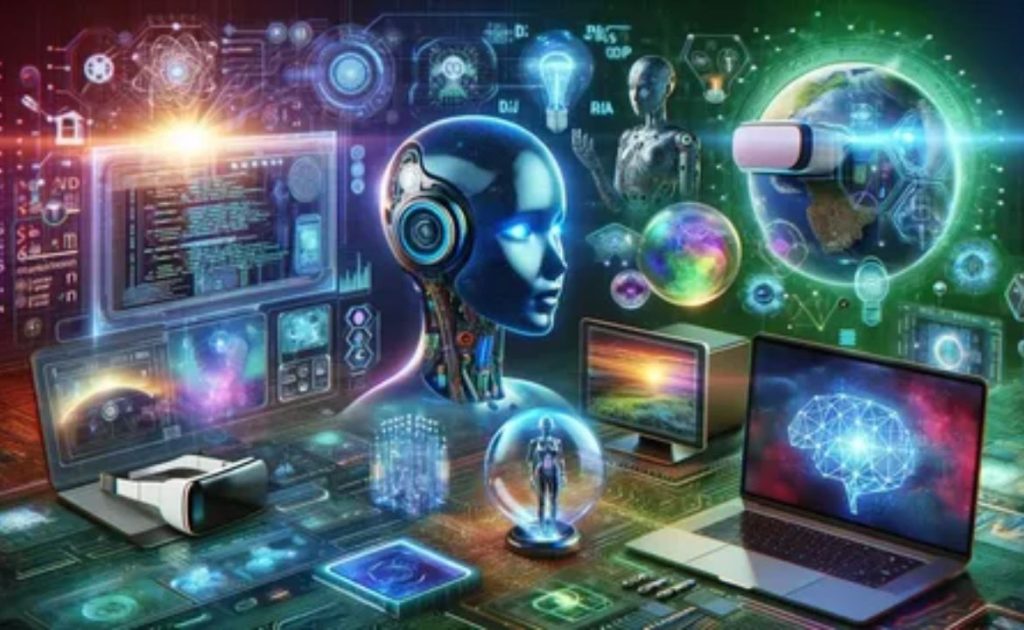

As we advance deeper into 2025, the technological landscape continues to evolve at an unprecedented pace, reshaping industries, transforming business models, and revolutionizing how we interact with the digital world. Understanding the major trends in technology togtechify has become crucial for businesses, investors, and technology enthusiasts who want to stay ahead of the curve in this rapidly changing environment.
The Rise of Generative AI and Large Language Models
Artificial Intelligence has reached a pivotal moment in 2025, with generative AI technologies becoming increasingly sophisticated and accessible. The integration of advanced language models into everyday applications has transformed content creation, software development, and customer service operations. Companies are leveraging these tools to automate complex tasks, generate personalized content at scale, and enhance decision-making processes.
The democratization of AI tools has enabled smaller businesses to compete with larger corporations by automating routine tasks and improving operational efficiency. From automated code generation to intelligent customer support chatbots, AI is no longer a luxury reserved for tech giants but an essential tool for businesses of all sizes.
Machine learning algorithms have become more efficient and specialized, with domain-specific models outperforming general-purpose solutions in areas such as healthcare diagnostics, financial analysis, and supply chain optimization. The trend toward edge AI computing has also gained momentum, allowing for real-time processing and reduced latency in IoT applications.
Quantum Computing Breakthroughs
2025 has witnessed significant milestones in quantum computing, moving from theoretical research to practical applications. Major technology companies have announced quantum advantage in specific use cases, particularly in cryptography, drug discovery, and complex optimization problems. While widespread adoption remains years away, the foundation for quantum-powered solutions is being laid today.
The major trends in technology togtechify include quantum-classical hybrid systems that combine the strengths of both computing paradigms. These systems are already showing promise in financial modeling, weather prediction, and materials science research. As quantum hardware becomes more stable and error-corrected, we can expect to see more real-world applications emerge.
Investment in quantum technology has surged, with governments and private entities recognizing its potential to solve previously intractable problems. The race to achieve quantum supremacy in commercially viable applications has intensified, driving innovation across hardware, software, and algorithm development.
Extended Reality (XR) and Spatial Computing
The convergence of virtual reality (VR), augmented reality (AR), and mixed reality (MR) technologies has created a new paradigm in spatial computing. 2025 has seen the launch of more sophisticated XR devices that offer improved comfort, better visual fidelity, and more intuitive interaction methods. These advancements are driving adoption across industries ranging from education and healthcare to manufacturing and entertainment.
Spatial computing platforms are enabling new forms of collaboration and productivity, allowing remote teams to work together in shared virtual environments. The integration of AI with XR technologies has created more intelligent and responsive virtual experiences, making these platforms more practical for everyday use.
The enterprise adoption of XR technologies has accelerated, with companies using these tools for training, design visualization, and remote assistance. As hardware costs decrease and software ecosystems mature, XR is transitioning from a niche technology to a mainstream computing platform.
Sustainable Technology and Green Computing
Environmental consciousness has become a driving force behind technological innovation in 2025. The major trends in technology togtechify prominently feature sustainable computing practices, energy-efficient hardware designs, and circular economy principles in technology manufacturing.
Data centers are implementing advanced cooling systems, renewable energy sources, and AI-optimized resource management to reduce their carbon footprint. Edge computing architectures are reducing the need for data transmission, thereby decreasing energy consumption while improving performance.
The development of biodegradable electronics, sustainable battery technologies, and eco-friendly manufacturing processes has gained significant traction. Technology companies are increasingly adopting environmental, social, and governance (ESG) criteria in their product development and business operations.
Carbon-negative technologies and climate tech solutions are receiving substantial investment and attention. From carbon capture systems powered by AI to smart grid technologies that optimize energy distribution, technology is playing a crucial role in addressing climate change challenges.
Autonomous Systems and Robotics
The advancement of autonomous systems has reached new heights in 2025, with improvements in sensor technology, AI algorithms, and real-time processing capabilities. Autonomous vehicles have achieved higher levels of reliability and safety, leading to expanded deployment in specific geographical areas and use cases.
Robotics technology has evolved beyond industrial applications to include service robots, healthcare assistants, and domestic automation systems. The integration of advanced AI with robotic platforms has created more adaptable and intelligent machines capable of performing complex tasks in unstructured environments.
Drone technology has matured significantly, with applications ranging from delivery services and agricultural monitoring to disaster response and infrastructure inspection. The regulatory framework for autonomous systems has also evolved, providing clearer guidelines for deployment and operation.
Biotechnology and Digital Health
The intersection of technology and healthcare continues to produce groundbreaking innovations in 2025. Personalized medicine powered by AI and genomics is becoming more accessible, enabling targeted treatments based on individual genetic profiles and health data.
Digital therapeutics and remote monitoring technologies have transformed patient care, allowing for continuous health tracking and early intervention. The major trends in technology togtechify include wearable devices with advanced biometric sensors, AI-powered diagnostic tools, and telemedicine platforms that provide comprehensive healthcare services.
Biotechnology applications in agriculture and environmental conservation are also gaining prominence. Gene editing technologies, synthetic biology, and bioengineering solutions are being developed to address food security, environmental restoration, and sustainable materials production.
Cybersecurity and Privacy-First Technologies
As digital transformation accelerates, cybersecurity has become more critical than ever. 2025 has seen the emergence of advanced threat detection systems powered by AI, zero-trust security architectures, and quantum-resistant cryptography solutions.
Privacy-preserving technologies such as homomorphic encryption, secure multi-party computation, and differential privacy are being integrated into mainstream applications. These technologies enable data analysis and sharing while maintaining individual privacy and compliance with regulatory requirements.
The development of decentralized identity systems and self-sovereign identity solutions is giving users more control over their personal data. Blockchain technology is being utilized to create immutable audit trails and enhance transparency in data handling processes.
The Internet of Things (IoT) and Smart Cities
The IoT ecosystem has matured significantly in 2025, with billions of connected devices generating valuable data and enabling intelligent automation. Smart city initiatives are leveraging IoT sensors, edge computing, and AI analytics to optimize traffic flow, reduce energy consumption, and improve public services.
Industrial IoT applications have transformed manufacturing processes, enabling predictive maintenance, quality control, and supply chain optimization. The integration of 5G networks with IoT devices has provided the high-speed, low-latency connectivity required for real-time applications.
Edge computing infrastructure has become essential for processing IoT data locally, reducing bandwidth requirements and improving response times. But this distributed computing model is enabling new applications in autonomous vehicles, smart manufacturing, and augmented reality experiences.
Looking Forward: Preparing for Tomorrow’s Technology
The major trends in technology togtechify discussed in this analysis represent just the beginning of a technological revolution that will continue to unfold throughout 2025 and beyond. Organizations and individuals must stay informed about these developments and adapt their strategies accordingly.
Investment in digital literacy and continuous learning has become essential for professionals across all industries. The rapid pace of technological change requires a mindset of lifelong learning and adaptability to remain relevant in an evolving job market.
As these technologies mature and converge, we can expect to see even more innovative applications and use cases emerge. The key to success in this dynamic environment is maintaining awareness of emerging trends, understanding their potential impact, and being prepared to embrace change when opportunities arise.
The future of technology is being written today, and those who understand and leverage these major trends in technology togtechify will be best positioned to thrive in the digital economy of tomorrow.
Conclusion
The technological landscape of 2025 represents a convergence of innovation, sustainability, and human-centric design that is reshaping every aspect of our lives. From the democratization of artificial intelligence to the emergence of quantum computing applications, from sustainable computing practices to the maturation of autonomous systems, these developments are not isolated phenomena but interconnected elements of a broader digital transformation.
The major trends in technology togtechify we’ve explored demonstrate that technology is becoming more accessible, intelligent, and environmentally conscious. Organizations that embrace these trends while maintaining a focus on ethical implementation and user value will find themselves at the forefront of innovation. Meanwhile, those who resist change or fail to adapt may find themselves increasingly disadvantaged in a rapidly evolving marketplace.
As we move forward, the integration of these technologies will create new possibilities we can barely imagine today. The combination of AI, quantum computing, XR, and IoT will likely produce breakthrough applications that transform industries in unexpected ways. But the key to navigating this technological revolution successfully lies in remaining curious, adaptable, and committed to continuous learning.
The trends outlined in this analysis are not merely predictions—they are the reality of our current technological moment.but By understanding and preparing for these changes, we can harness the power of technology to create a more efficient, sustainable, and equitable future for all. The journey of technological evolution continues, and 2025 marks just another milestone in humanity’s ongoing quest to push the boundaries of what’s possible.